


Your Professional Trailer Supplier
Our goal is to be your reliable partner for trailer in China. As a state-owned enterprise, GLOBAL ONE INTERNATIONAL AUTOMOBILE LIMITED initiated China's automotive exports in 1980, and has since become a global leader in international trade of Chinese vehicles and commercial special semi-trailers. We have a skilled engineering team dedicated to refining every stage, ensuring every product delivered meets rigorous quality and performance standards. The price is competitive and the product is quality-assured, which is a good choice for your long-term cooperation.


Why Choose Us
Our capacity
Our annual production exceeds 20,000 units, ranking among the top three exporters.
Production market
Our products are highly sought after, with 20,000 units exported annually to the Middle East, South America, Russia, Central Asia, and Australia.
Efficient global product delivery
We are well-versed in international export policies and can smoothly navigate trade regulations, tariffs, and compliance issues. Furthermore, our optimized supply chain, established through long-term logistics and customs partnerships, ensures efficient global product delivery.
Our services
We provide professional technical consulting services to our customers, explaining product performance and usage requirements, providing relevant technical information. Upon receiving a customer notification, we will respond with hours and dispatch a technician to promptly resolve the issue, ensuring continuous service until the problem is resolved.
Advantages of Trailer
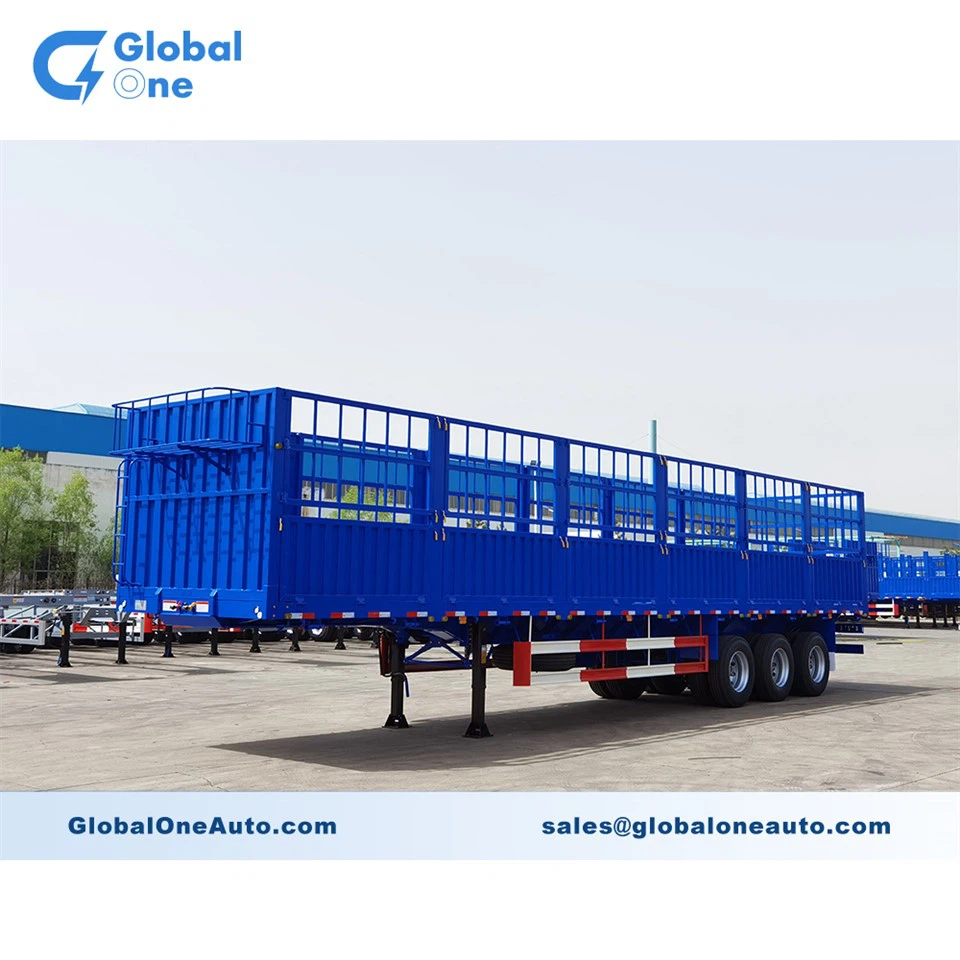
Enhanced mobility
One key advantage of buying an equipment trailer is enhanced mobility. Regardless of the size or quantity of your equipment, a well-designed trailer can safely transport it from one location to another with ease. This convenience is vital for industries requiring frequent site changes.
Versatility
Another merit of equipment trailers lies in their versatility. Not restrained to transporting only one type or size of cargo, equipment trailers can be customized for various purposes, extending their utility beyond conventional expectations.


Increased efficiency
Owning an equipment trailer can significantly increase efficiency. With the ability to transport multiple pieces of equipment like a utv, atv, or tractor simultaneously, businesses can reduce time spent on travel and concentrate more on the operation at hand.
Cost-effectiveness
Buying an equipment trailer also proves cost-effective over time. Considering the rental costs accumulated over repeated uses versus the upfront investment in purchase, having your own machine becomes a financially sound decision in the long run.

Specification of Trailer
|
Axles |
Depending on the specific model |
|
Dimensions |
Depending on the specific model |
|
Length |
Depending on the specific model |
|
Width |
Depending on the specific model |
|
Height |
Depending on the specific model |
|
Capacity |
40-80 tons and more |
|
Tare Weight |
Depending on the specific model |
|
Material |
Main beams Q345B, upper flange:14mm, middle:8mm, down:16mm |
|
Chassis |
3mm, 4mm, 6mm, carbon steel or aluminum |
|
Suspension |
Mechanical suspension, air suspension |
|
Tire |
Depending on the specific model |
Types of Trailer
Flatbed trailer
Flatbeds are open trailers for moving oversized freight like heavy machinery and large equipment. There are several types of flatbeds; however, they are all primarily flat platforms without cover and sides attached to the truck where cargo is loaded and fixed.
Refrigerated trailer
Refrigerated trucks look like dry vans but have temperature regulation tools. These trailers have climate control to accommodate certain temperatures, so your freight remains in the required temperature range during transit.
Dry van trailer
Dry van trailers are versatile and used for all kinds of freight, ranging from non-perishable food to building materials.

Manufacturing Processes of Trailer
Material selection: It uses high-strength steel and aluminum alloys that not only ensure the durability of the trailer but also enhance its safety. High-strength steel provides the structural strength necessary to withstand heavy loads and the stresses of prolonged use. Aluminum alloys, on the other hand, are lightweight and corrosion-resistant, improving the trailer’s fuel efficiency and overall performance.
Manufacturing process: It employs strict quality control standards and advanced manufacturing techniques from material selection to final assembly. During the manufacturing process, modern production equipment and processes are used to ensure that each trailer meets the highest quality standards.
Key Components of Trailer

Axles and suspension systems: At the core of a truck trailer’s structural integrity are its axles and suspension systems. Axles, available in single, tandem, and tri-axle configurations, dictate load-bearing capacities, while the suspension system, a sophisticated integration of springs, shocks, and linkages, ensures a harmonious balance between load distribution and road adaptability.
Wheels and tires: The visible manifestations of a truck trailer’s traction and stability are its wheels and tires. Tire selection is a nuanced process, considering factors such as load capacity, road conditions, and climatic variables.
Braking systems: Critical to the safety of cargo, crew, and the public at large, braking systems constitute a pivotal component of truck trailers. Air brakes, reliant on compressed air for activation, underscore the imperative of reliable stopping power.
Kingpins and fifth wheels: Facilitating the seamless connection between tractor and trailer, kingpins and fifth wheels epitomize precision engineering. The kingpin, a robust steel pin situated beneath the trailer, engages with the fifth wheel on the rear of the truck, enabling articulate turns.
Landing gear: When the trailer stands independent of the truck, stability is ensured by the landing gear. Comprising retractable legs, this system is not merely a static support structure; it is a dynamic feature that allows for facile deployment and retraction.
Lights and wiring: Visibility on the road is paramount and achieved through a meticulously designed network of lights and wiring. Brake lights, turn signals, reverse lights, and marker lights collectively contribute to the trailer’s visibility and compliance with safety regulations.
Customization Process at Trailer
Consultation
Our experts work with you to understand your needs and goals.
Design
We provide design options and recommendations tailored to your budget and requirements.
Customization
Our skilled technicians make the modifications using high-quality materials and precise craftsmanship.
Delivery
Once completed, your custom trailer is ready for use, backed by our quality guarantee.
Packing and Shipping of Trailer
|
Packing |
Tray |
|
Shipping |
Shipped by road, sea, rail |
FAQ
As one of the most professional trailer suppliers in China, we're featured by providing high quality Chinese vehicles and commercial special semi-trailers. Please rest assured to wholesale trailer made in China here from our company.